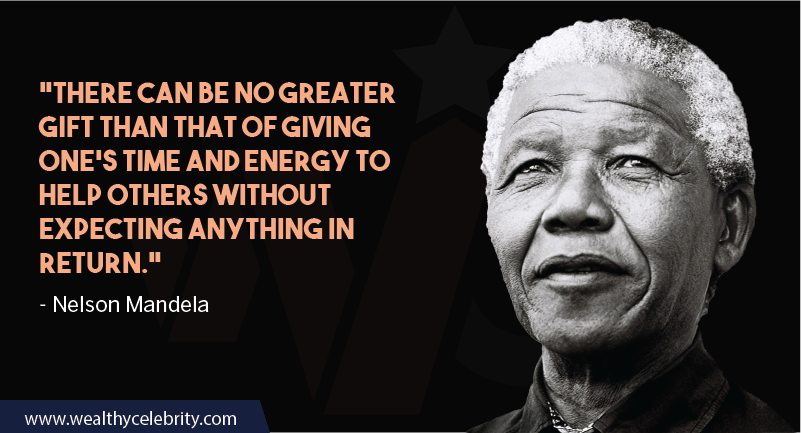
Nelson Rolihlahla Mandela Xhosa ([xolilala mde:la[xolilala mde:la]) was a South African politician and anti-apartheid activist who was the first president of South Africa between 1994 and 1999. The president was the first black head of government in South Africa, and the first president elected through a democratically constituted election. The government he led was focused on eradicating the legacy of apartheid by fostering racial reconciliation. He was a socialist as well as an African nationalist from 1991 until 1997. He completed his law studies at the University of Fort Hare and the University of Witwatersrand before working as an attorney in Johannesburg. There he became engaged with anti-colonial and African nationalist politics, joining the ANC in 1943, and co-founding its Youth League in 1944. The National Party's exclusive white government instituted apartheid as a system of racial segregation which favored whites, Mandela and the ANC committed themselves to its overthrow. Mandela was elected president of the ANC's Transvaal branch, rising to fame for his participation in the 1952 Defiance Campaign and the 1955 Congress of the People. He was arrested several times for seditious activities and was unsuccessfully prosecuted in the 1956 Treason Trial. Influenced by Marxism and the Communist Party, he secretly became a member of the banned South African Communist Party (SACP). The initial commitment was to peaceful protest , but with the SACP was the founder of the militant uMkhonto we Sizwe and led an attack of sabotage against the government. He was arrested and imprisoned in 1962. He was later after the Rivonia Trial and the Rivonia Trial, was sentenced to life imprisonment for conspiring to overthrow the state Mandela served 27 years in prison, divided in Robben Island, Pollsmoor Prison and Victor Verster Prison. Amid growing domestic and international pressures and fears of a the possibility of a civil war between races The president F. W. de Klerk was able to release him in 1990. Mandela as well as de Klerk were leaders in efforts to end apartheid. This resulted in the 1994 multiracial general elections in which Mandela won the ANC victory and was elected as president. Mandela led a broad coalition government that promulgated the constitution of 1994. He also created the Truth and Reconciliation Commission, which is a body that examines the past of human rights abuses. Economically, his administration retained its predecessor's liberal framework despite his own socialist beliefs and also introduced measures to encourage land reform, combat poverty and expand healthcare services. Internationally, Mandela acted as mediator in the Pan Am Flight 103 bombing trial. He also served as secretary general of the Non-Aligned Movement from 1998 to 1999. Thabo Mbeki was his deputy. his predecessor. Mandela became a more senior politician and focused his efforts on the issue of poverty and HIV/AIDS through the Nelson Mandela Foundation. Mandela was a controversial figure throughout much of his life. Although critics on the right criticized him for being a communist terrorist and those from the left believed he was too eager to reach out and negotiate with apartheid's supporters, he gained international acclaim for his advocacy. He is regarded worldwide as an icon for democratic values and social justice. He has been awarded more than 250 awards, among them the Nobel Peace Prize. He is held in deep respect within South Africa, where he is often called by his Thembu clan name, Madiba, and described as the "Father of the Nation".




No comments:
Post a Comment